

Published Date: 20/10/2026

Published Date: 20/10/2026
We are excited to announce the winners of the There Is Only Narrative competition with Eve White Literary Agency.
The There Is Only Narrative competition aimed to find new writers of non-fiction from backgrounds underrepresented in UK publishing. Running from April-June 2026, the competition was open to UK-based, unagented and unpublished writers aged 18+ from the following communities: Black, Asian, Global Majority, disabled, LGBTQIA+, low income and working class.
Six winners have been chosen. They will receive a group session with writer and journalist Damian Le Bas, ongoing developmental support from London Writers Centre and the Eve White Literary Agency, and the opportunity to be agented.

Winning means so much because this project grew from wanting to write the kind of folklore book I had been looking for myself: one where the people inside our ghost stories matter as much as the ghosts. Working-class lives survive in folklore in ways they often don’t in official records, and I’m incredibly excited to bring those histories back into view.
The winners
The six winners of the There Is Only Narrative competition are:

Hannah Walton
for The Archive of Superstition
Hannah Walton
for The Archive of Superstition
Hannah Walton is a writer and folklorist based in Norfolk. Her work explores British folklore, working-class history and the traces of ordinary lives preserved in stories, beliefs and cultural memory. Her short story The Hollow Fetch won the 2026 John McGivering Writing Prize and was published in The Kipling Journal. She is a Paul Mellon Centre-funded MA student at Birkbeck, University of London.
The Archive of Superstition searches Britain’s supernatural past for the ordinary lives history left behind. From ghost stories and omens to charms and strange encounters, it asks what supposedly irrational beliefs can reveal about work, danger, care, community and survival. Reading folklore as an unofficial archive of working-class experience, the book uncovers histories preserved not in institutions, but in the stories people told, remembered and passed on.

Jackie Morrison
for The Wild Way Forward
Jackie Morrison
for The Wild Way Forward
Jackie Morrison is a working-class writer living with a disabling condition from the east coast of Scotland. Following a career as a charity manager, her writing became an anchor while caring for her late mother. Previously focussed on uplifting fiction, this memoir is a transition into non-fiction, capturing a very personal journey. Jackie can be found in her motorhome in wild locations throughout the country, notebook in hand.
Facing a sudden, life-altering blood cancer diagnosis, one couple makes the spontaneous decision to buy a motorhome and mark every gruelling chemotherapy cycle with a wild adventure. Scotland’s rugged mountains, forests, and lochs mirror the emotional stages of both grief and hope, in a deeply moving story of love, resilience and the ancient comfort of the wild.

Niamh Cassidy
for My Father’s Body
Niamh Cassidy
for My Father’s Body
Niamh Cassidy is a writer based in Norwich. A lapsed Catholic raised in England to Irish parents, Niamh writes about family, class and religion, and the way that personhood is shaped by them. Alongside her work as a content strategist, Niamh is currently completing a Masters at the University of East Anglia. She spends the rest of her time haunting Norwich’s many historic pubs and churches.
My Father’s Body is a memoir about growing up with a disabled parent. It charts a daughter’s childhood growing up in the shadow of her father’s decline: one body, his, comes to define both their lives. The book traces the complex anatomy of family, health and care, and the challenge of living with someone else’s wounds.

Rachel Piper
for Care Interrupts
Rachel Piper
for Care Interrupts
Rachel Piper is a writer, independent scholar and community organiser focused on health, disability and care. She splits her time between Oxford and London. For over a decade, she’s been listening to people’s stories, studying strategies for care, and co-producing alternative programmes and services. She is the author of the Substack Care Curriculum, a repository of resources on care. She’s into painting, improv comedy and swimming in the river.
We need care to live well, but caring is often seen as an interruption to a successful life. Care Interrupts: Sharing the Burden explores the consequences of sidelining care work. Weaving together memoir, stories and research from over a decade of experience, Care Interrupts offers strategies for interrupting the status quo. It asks what would happen if care was shared equally, and was at the heart of our decisions?

Sarah Jasat
for If You Want to Be Happy You Should Ride a Bicycle
Sarah Jasat
for If You Want to Be Happy You Should Ride a Bicycle
Sarah Jasat is a writer, PhD student and cycling advocate based in Leicester. Her research uses behavioural theory to encourage physical activity in chronic populations. Although she began writing fiction at a young age, she moved into non-fiction when she realised it was what she enjoyed reading the most. She can be found on Instagram posting about the joys of life on a pink bike.
Sarah Jasat is a writer, PhD student and cycling advocate based in Leicester. Her research uses behavioural theory to encourage physical activity in chronic populations. Although she began writing fiction at a young age, she moved into non-fiction when she realised it was what she enjoyed reading the most. She can be found on Instagram posting about the joys of life on a pink bike.

Talia Jacobs
for Swallowing Vomit
Talia Jacobs
for Swallowing Vomit
Talia Jacobs is a London-based writer who recently graduated from the University of Cambridge with a degree in English Literature. She was longlisted for the National Poetry Competition in 2024 and received the Everett Helm Fellowship in 2025, with an article set to appear in Life Writing. She is currently working on her debut book, Swallowing Vomit, and a short film adaptation of Virginia Woolf’s Moments of Being.
Swallowing Vomit is an experimental hybrid memoir, blending essay and auto-fiction, that explores the profound bodily and psychological shame that many women, its author included, confront in the act of writing. Anchored in a series of formative physical experiences of illness and the desperate struggle between suppression and expulsion, the narrative traces a direct parallel between bodily rejection and literary creation.
About There Is Only Narrative
The There Is Only Narrative competition was part of a wider programme that ran across 2025 and 2026. The programme included free online masterclasses in non-fiction by authors Damian Le Bas, Rae Earl, Eleanor Bruce and Lucilla Gray; a survey for writers on the barriers to and support they need to write non-fiction; panels with editors and agents to support writers to build a career in non-fiction; a detailed guide from Eve White Literary Agency on developing a proposal for a book idea and the competition for unagented and unpublished writers underrepresented in UK publishing.
Eve White, Founder and Agent at the Eve White Literary Agency, said:
“We are thrilled to have found these six exciting emerging authors and their projects through There Is Only Narrative. They vary greatly in style and subject, but they all feel like books that we might have struggled to find elsewhere. We look forward to offering support to these writers, and we hope that all the writers who have engaged with this programme will continue to develop their work.”
Bobby Nayyar, Senior Programme Manager at London Writers Centre, said:
“We developed There Is Only Narrative in close collaboration with Eve White and Ludo Cinelli to address the challenges of the non-fiction market and lack of diverse, new voices reaching publication. Over the course of a year we have run seminars, masterclasses and shared a guide to writing a non-fiction that has reached over 1,500 people. I’m delighted that this work has led to 78% of applicants trying their hand at non-fiction for the first time and six exceptional winners. We look forward to supporting their next steps on the path to publication.”
Through this programme and the competition, our cohort of six brilliant writers has been chosen. The aim is that they will go on to be represented by the Eve White Literary Agency and have their work published.
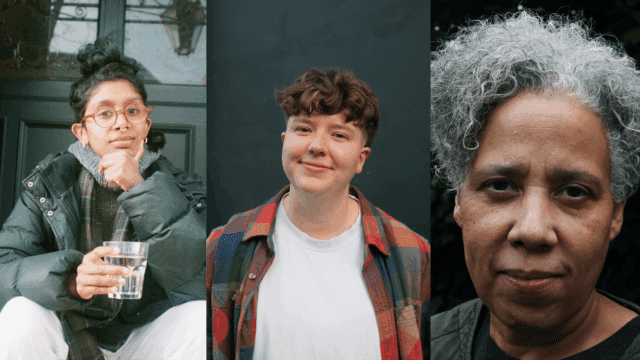
Announcing the Disabled Writers Comissions 2027
Announcing the three Disabled Writers Commissions 2027.
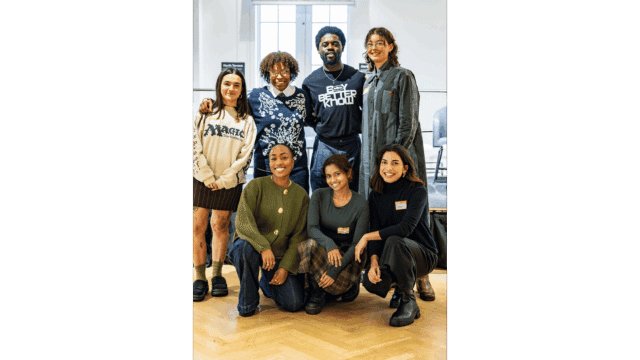
The Young Poets Summit 2026
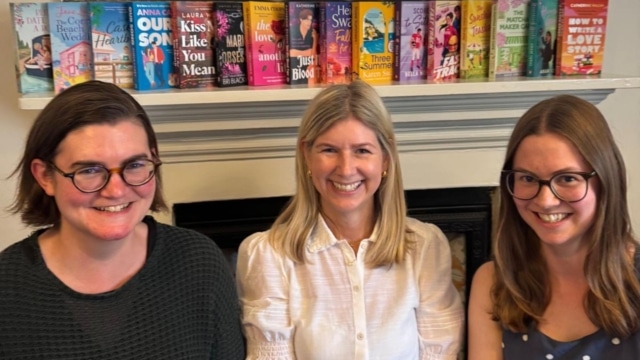
LBA and London Writers Centre launch It’s A Love Story
A programme to find diverse new romantic fiction writers.
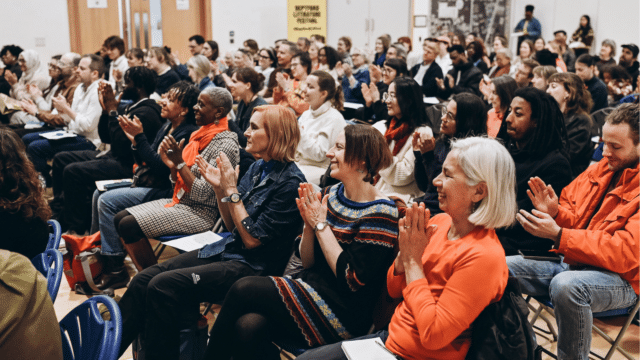
Save the date: Deptford Literature Festival 2027
London-based writers, poets and artists - take part in Deptford Literature Festival 2027.